

How do twin shaft shredders solve your recycling needs?
In the realm of industrial shredding, twin-shaft shredders stand out as robust and versatile machines capable of handling a wide range of materials. These shredders play a crucial role in various industries, from recycling to waste management. In this article, we delve into the workings of twin shaft shredders, exploring their mechanisms and highlighting their efficiency in breaking down diverse materials.
Understanding the Basics
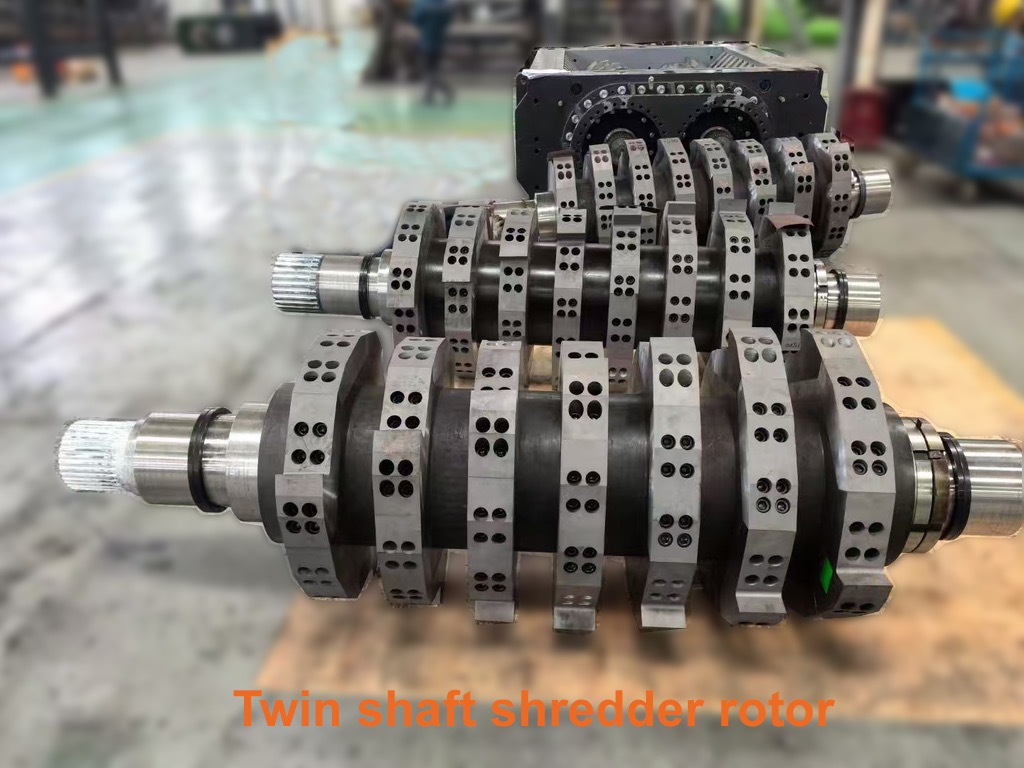
Twin shaft shredders, as the name suggests, feature two parallel shafts equipped with cutting blades. These blades rotate in opposite directions, creating a powerful and efficient shredding action. The materials to be shredded are fed into the space between the rotating shafts, where the blades catch, cut, and tear the materials apart.
Dual Shafts with Cutting Blades
The heart of a twin-shaft shredder lies in its dual shafts, each housing a set of sharp cutting blades. The cutting blades are staggered between the two shafts. The shafts are stacked with the cutting knives and can have different cutting geometries based on the material type. The application will determine the cutting hook height and number of cutting hooks per knife.
Counter-Rotating Motion
A defining feature of twin-shaft shredders is the counter-rotating motion of the shafts. While one shaft rotates clockwise, the other rotates counterclockwise. This opposing movement enhances the shredding efficiency by creating a shearing and tearing effect on the materials.
Variable Speed and Torque
Twin-shaft shredders often feature variable speed and torque settings. This flexibility allows operators to adjust the shredding parameters based on the type and density of the material being processed. Fine-tuning these settings optimizes performance and energy efficiency.